
If X 1 Y Y 1 X 0 Then Prove That 1 X 2 Dydx 1 0
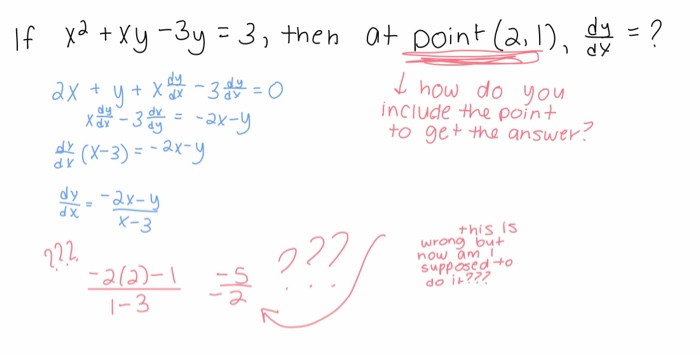
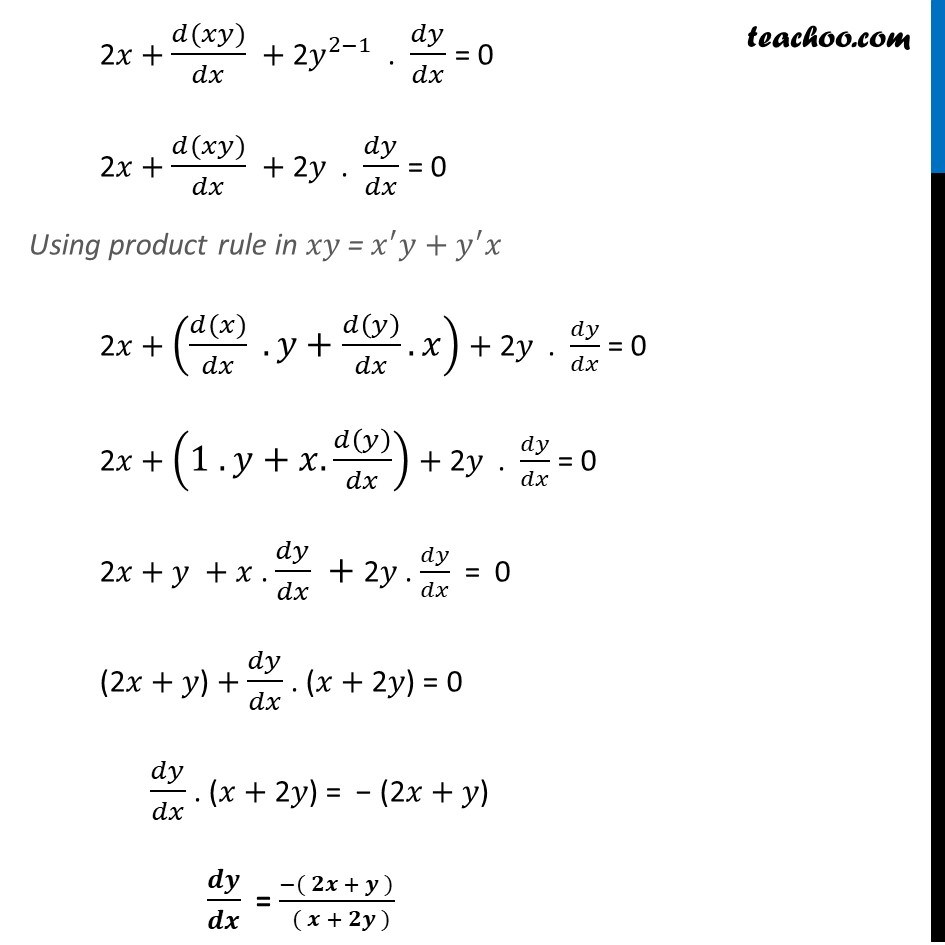
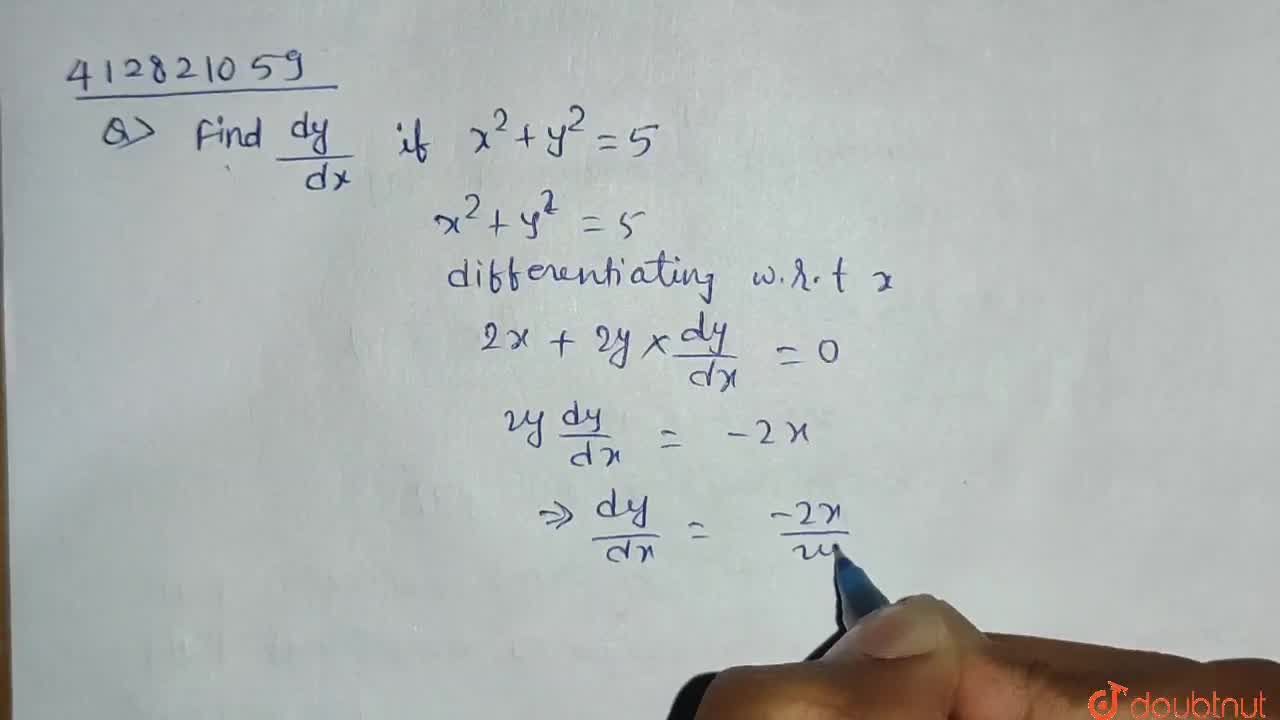
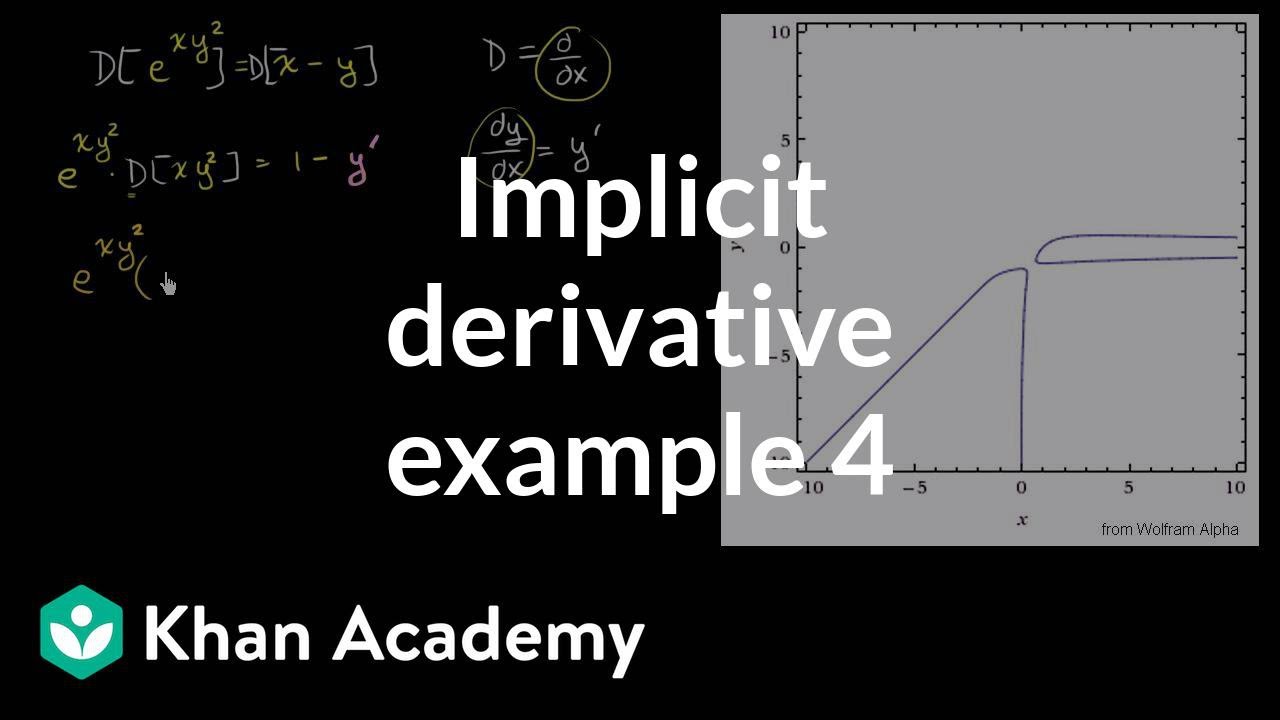
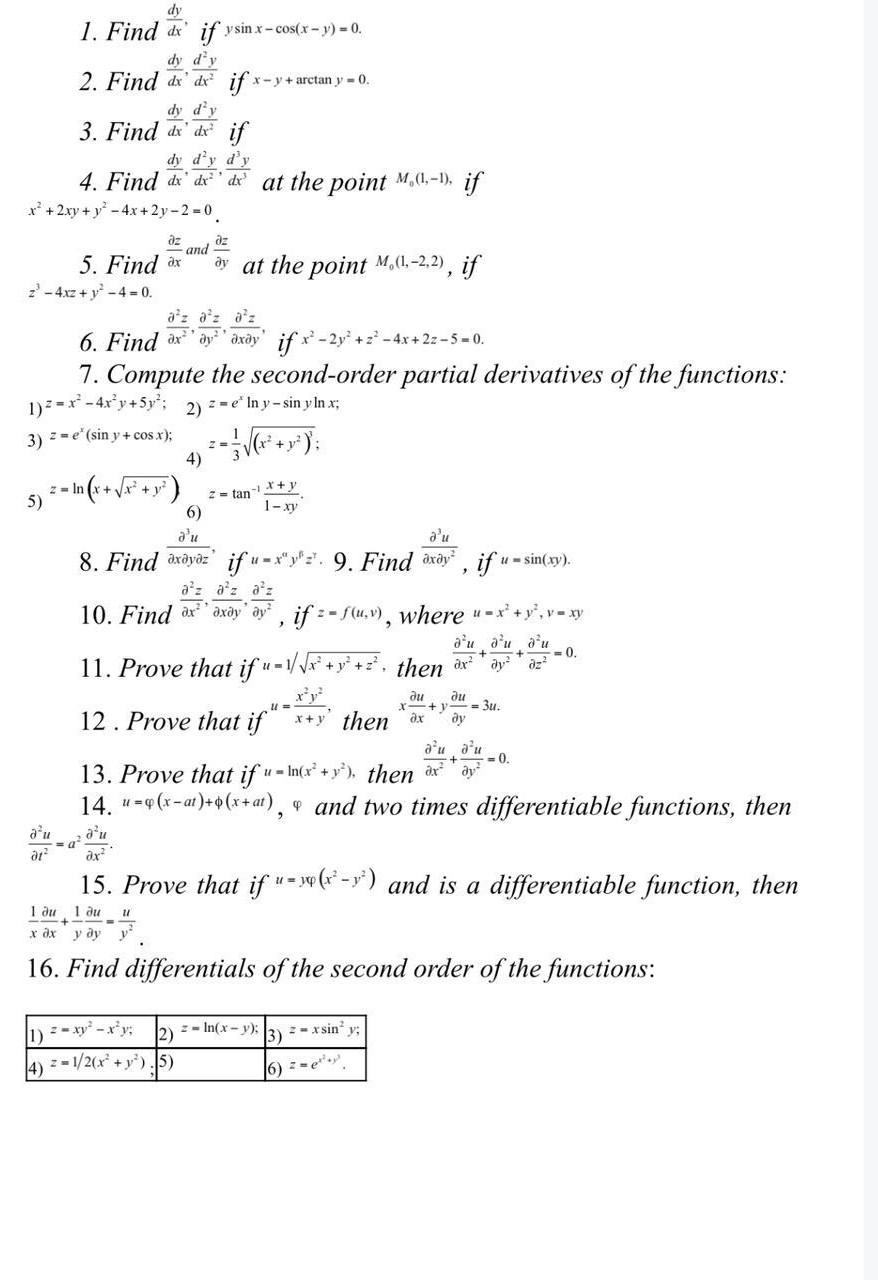
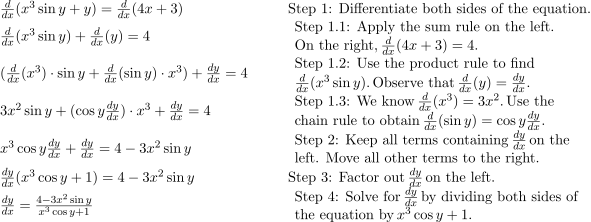
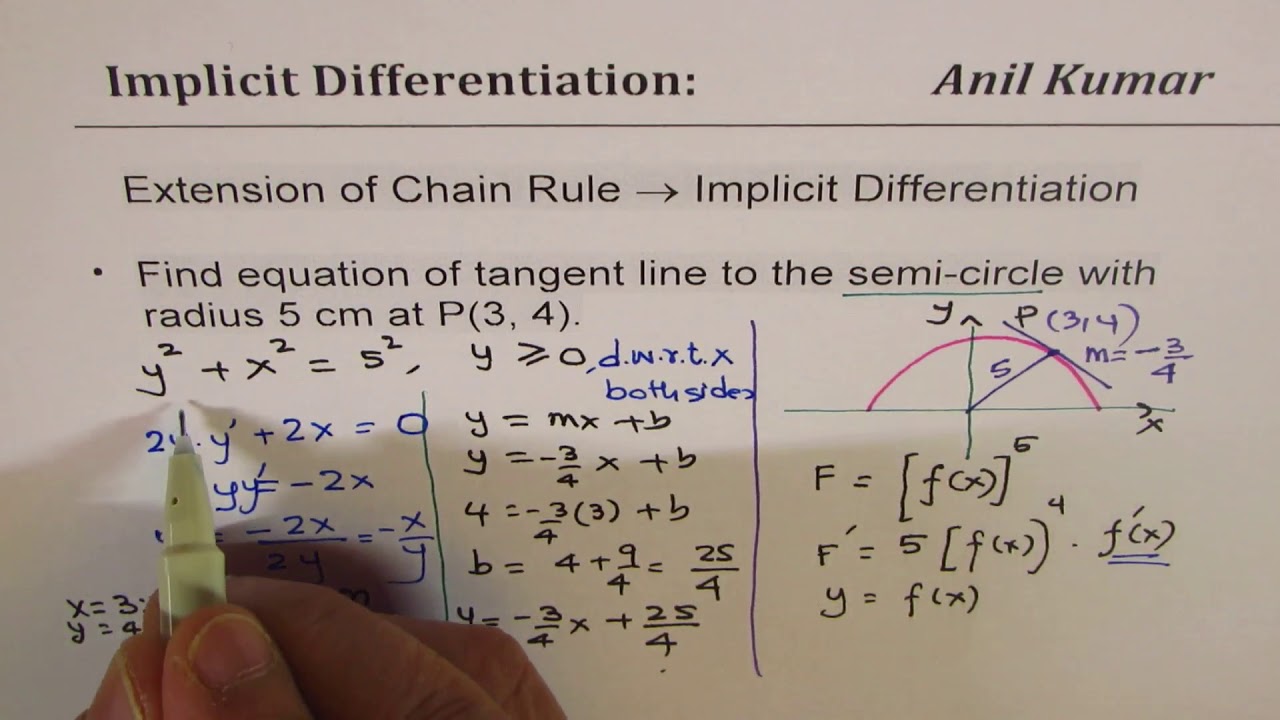
The first step is to find dy/dx To do this you must first expand the brackets x 2 y 2 2xy = xy 2 Then differentiate each term with respect to x dy/dx of (x 2) = 2x dy/dx of (y 2) = 2y(dy/dx) (Using the product rule with u=y 2 and v=1) this can be explained in more detail if necessary dy/dx of (2xy) = 2y 2x(dy/dx)Inverse Functions Implicit differentiation can help us solve inverse functions The general pattern is Start with the inverse equation in explicit form Example y = sin −1 (x) Rewrite it in noninverse mode Example x = sin (y) Differentiate this function with respect to
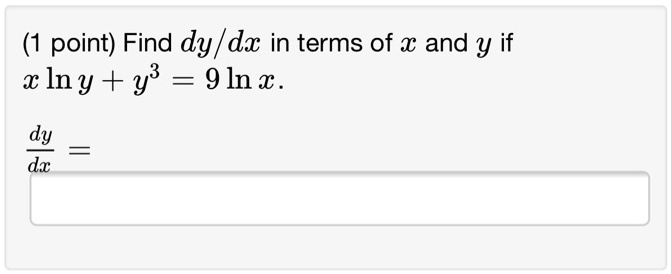
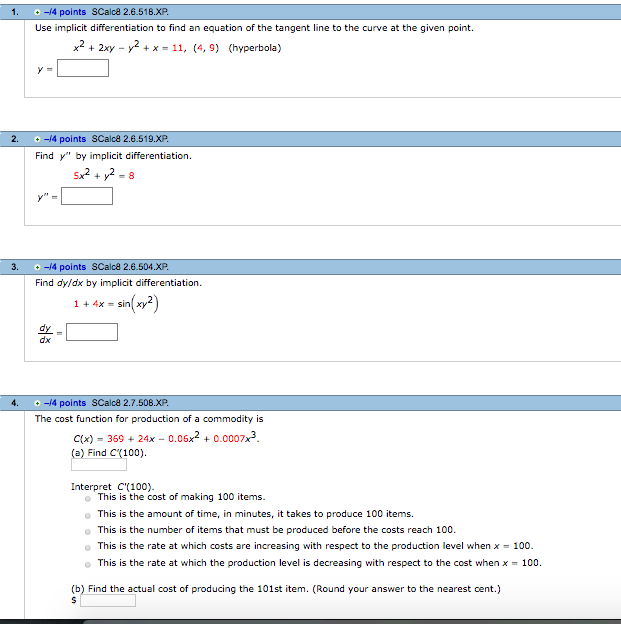
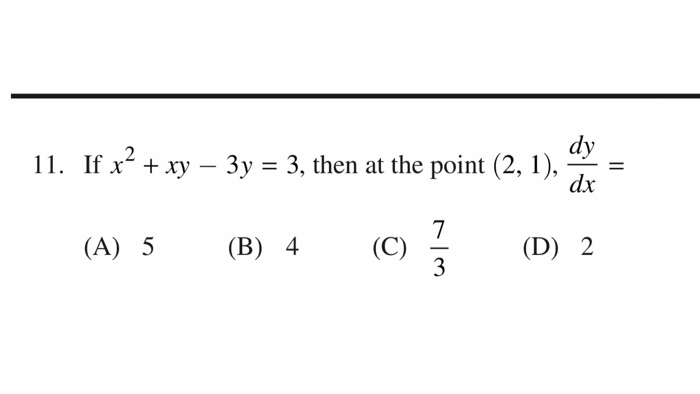
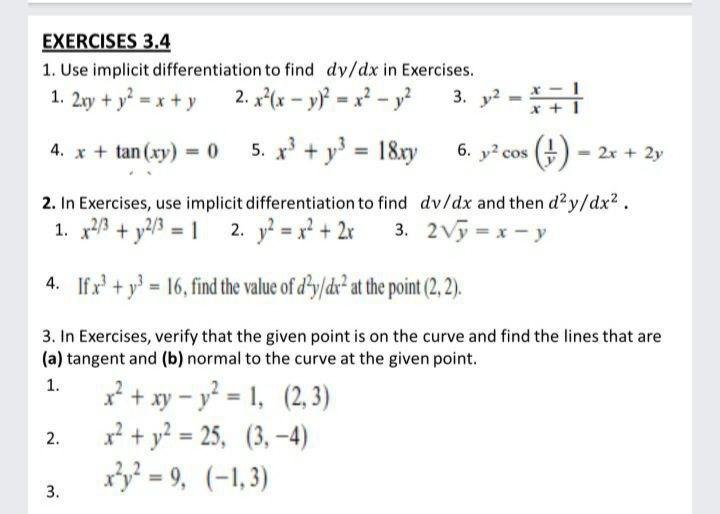
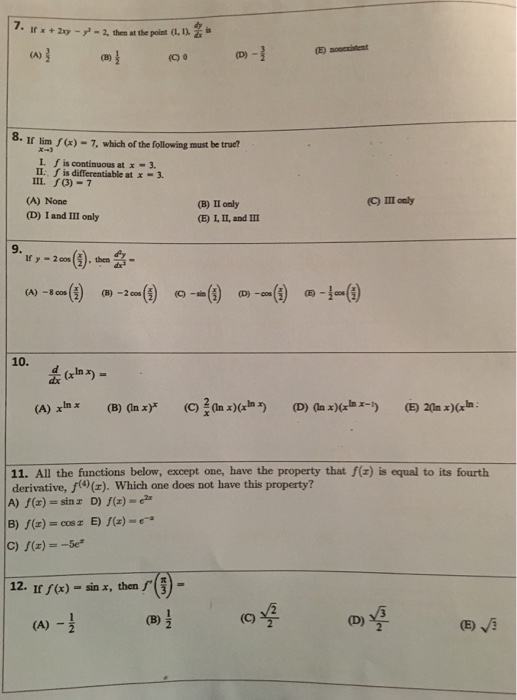
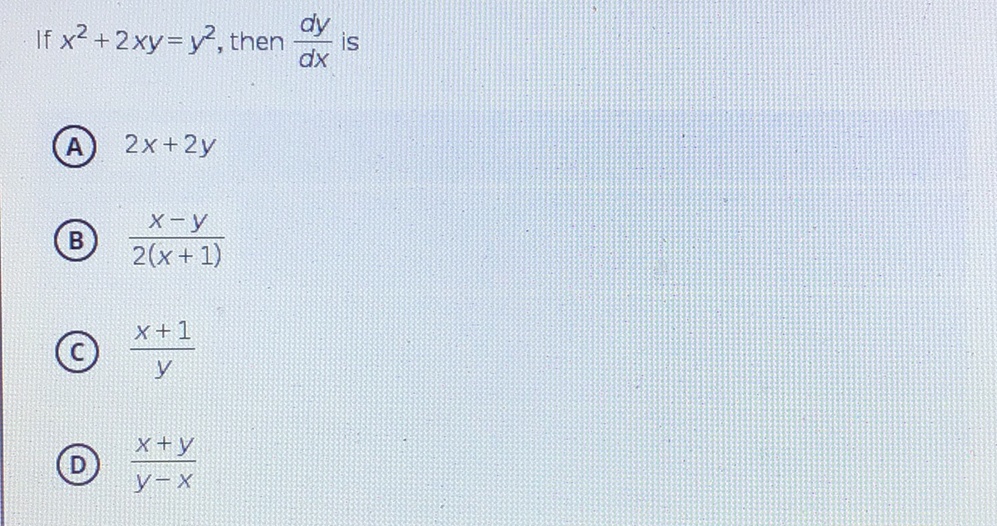
If x 2xy-y^2=2 at the point (1 1) dy/dx is
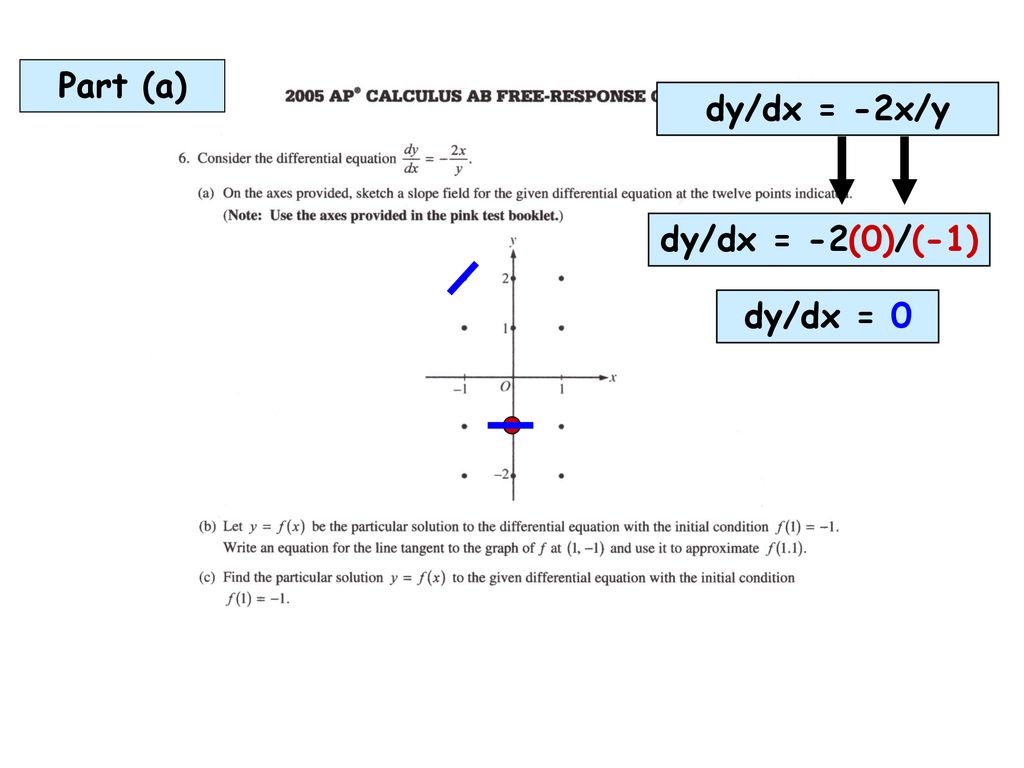
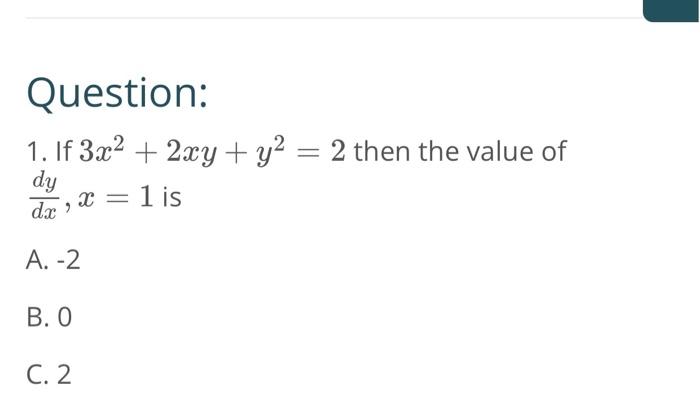
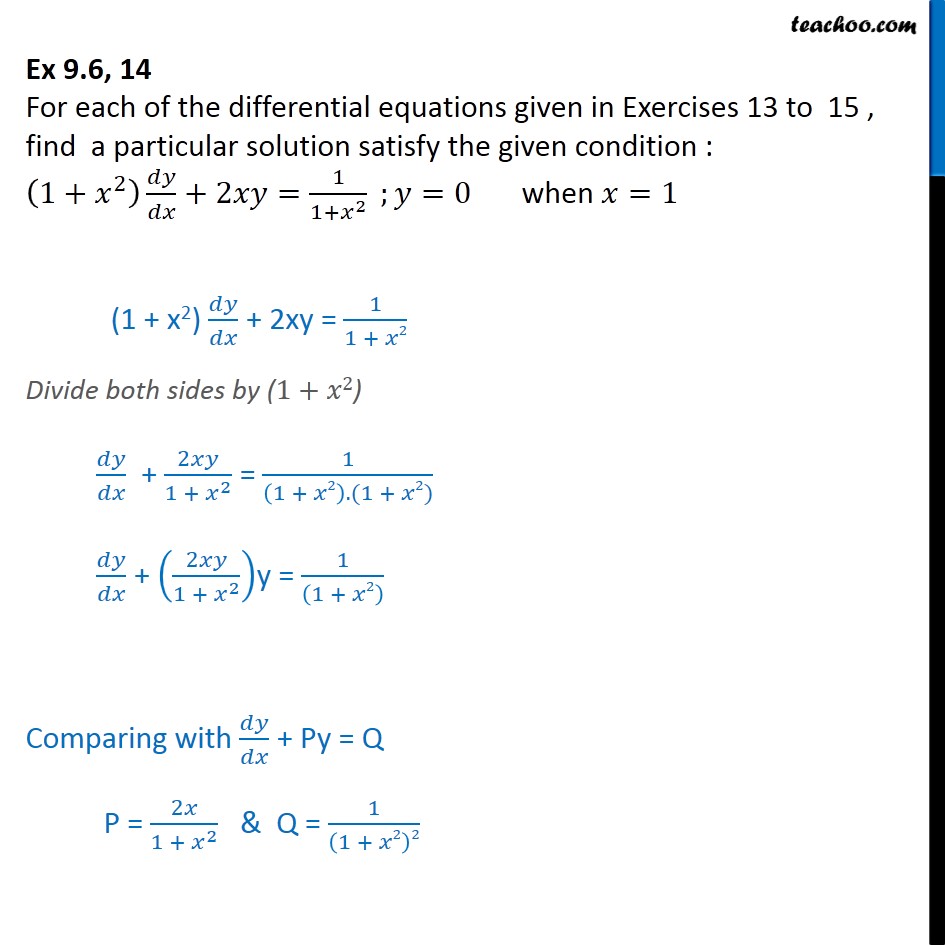
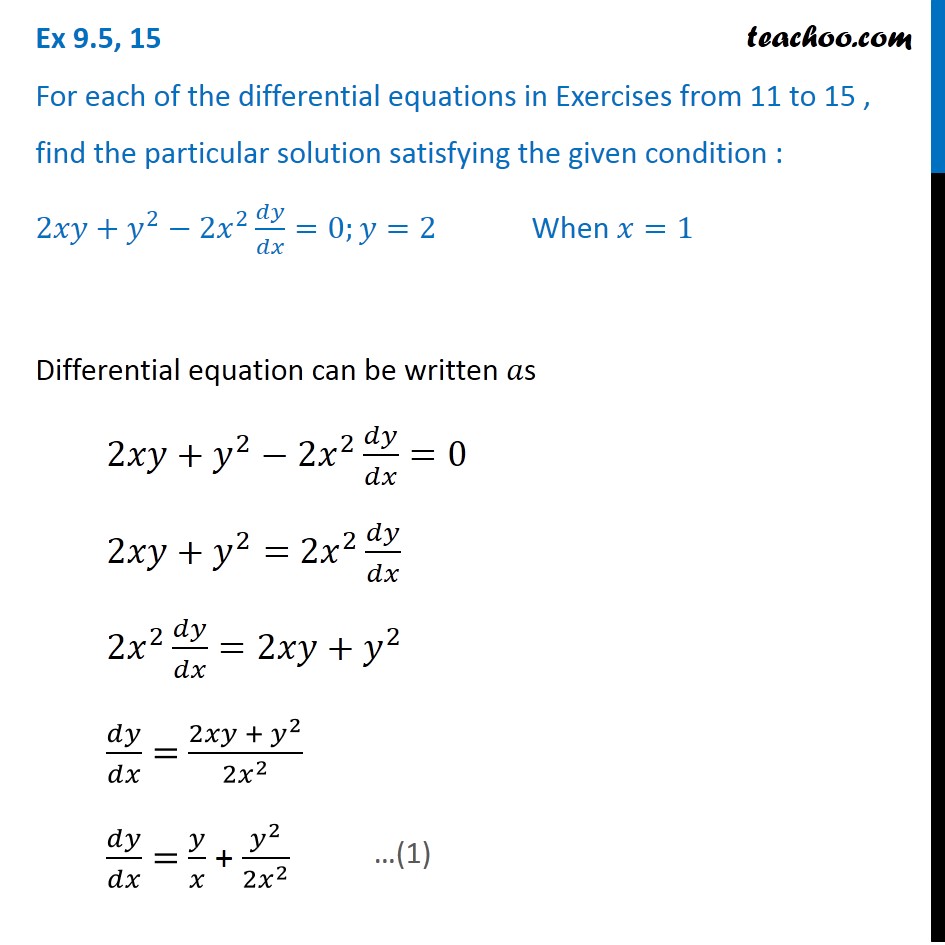
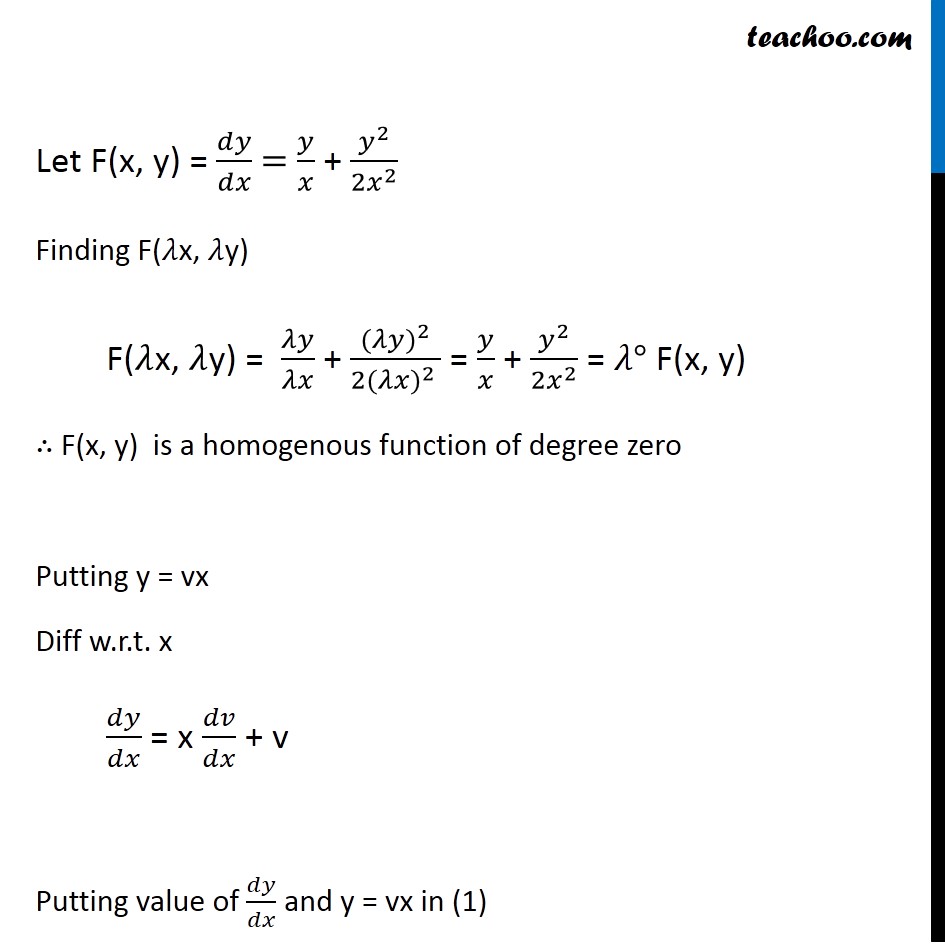
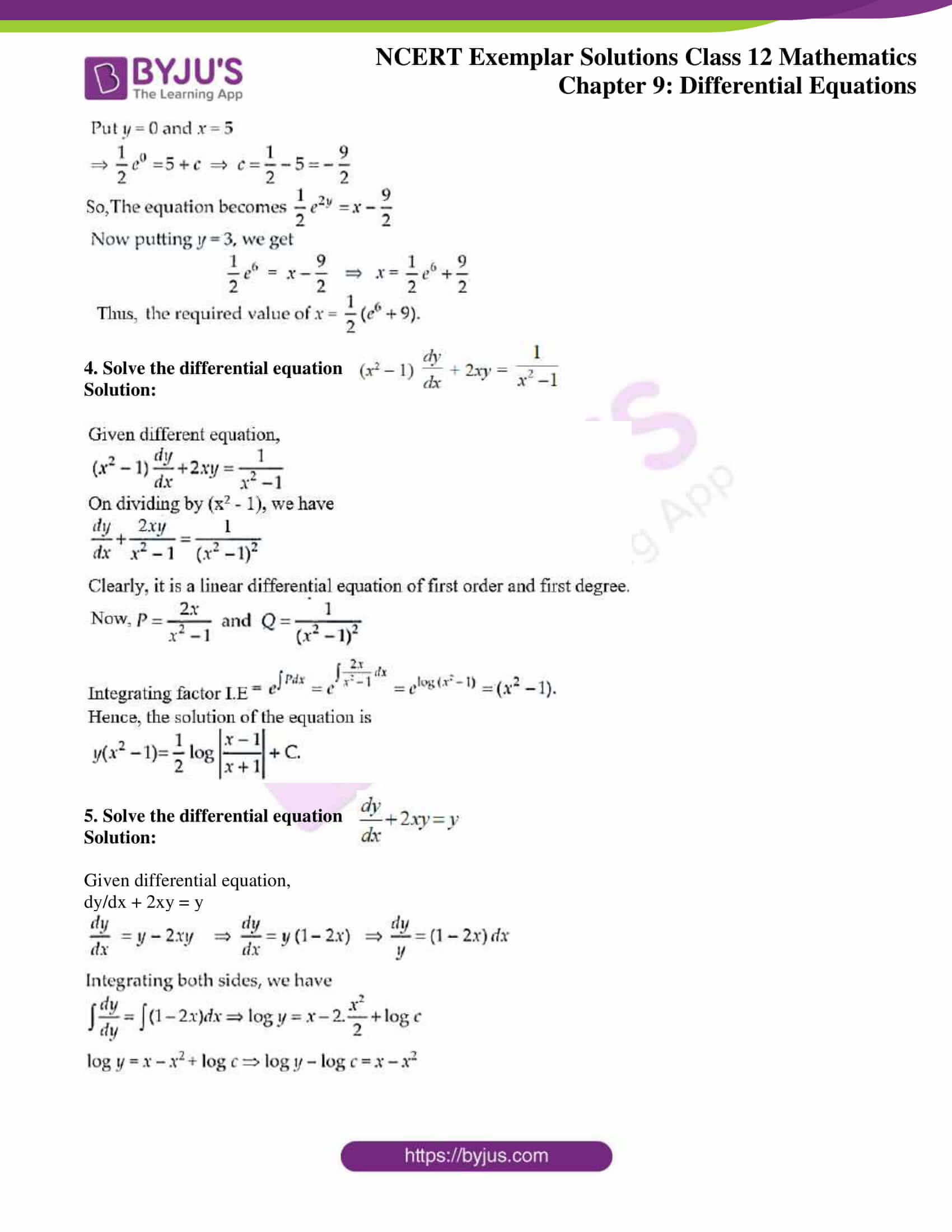
If x 2xy-y^2=2 at the point (1 1) dy/dx is- Find the four second partial derivatives and evaluate each at the given point Function f(x, y) = x^3 2xy^3 − 9y Point (9, 2) fxx(9, 2) = fxy(9, 2) = fyx(9, 2) = fyy(9, 2) = calculus 1 If 3x^22xyy2=2 then the value of dy/dx x = 1 is A Ex 95, 15 For each of the differential equations in Exercises from 11 to 15 , find the particular solution satisfying the given condition 2𝑥𝑦𝑦^2−2𝑥^2 𝑑𝑦/𝑑𝑥=0;𝑦=2 When 𝑥=1 Differential equation can be written 𝑎s 2𝑥𝑦𝑦^2−2𝑥^2 𝑑𝑦/𝑑𝑥=0 2𝑥𝑦𝑦^2= 2𝑥^2 𝑑𝑦/𝑑𝑥 2𝑥^2 𝑑𝑦/𝑑𝑥=2𝑥𝑦𝑦^2 𝑑𝑦/
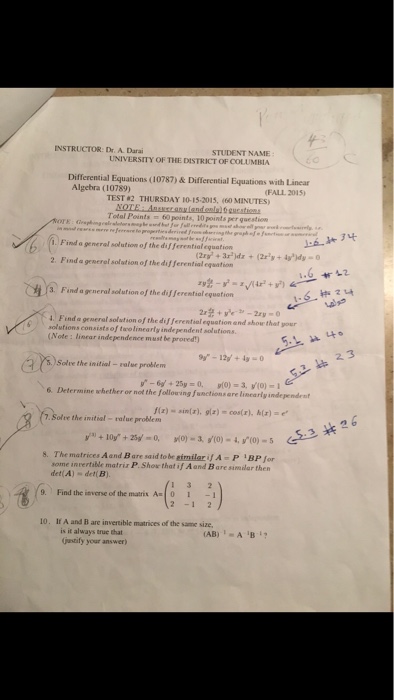
Solved Find A General Solution Of The Differential Equation Chegg Com
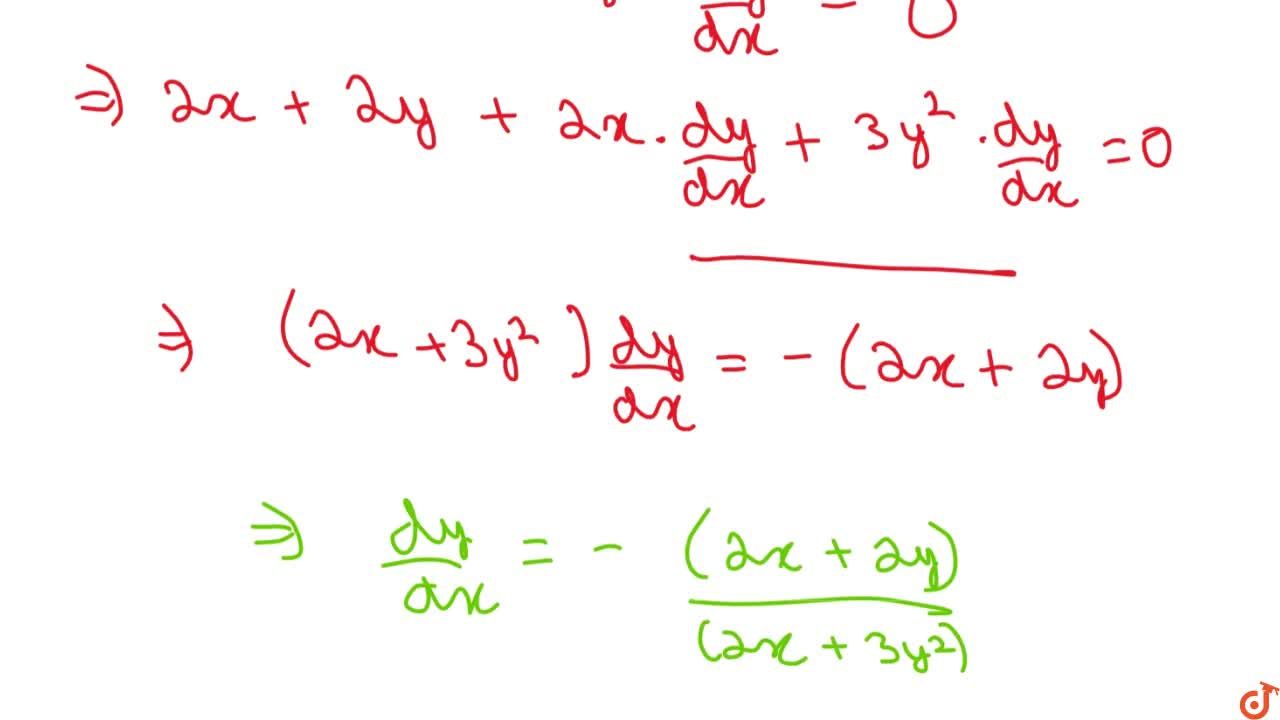
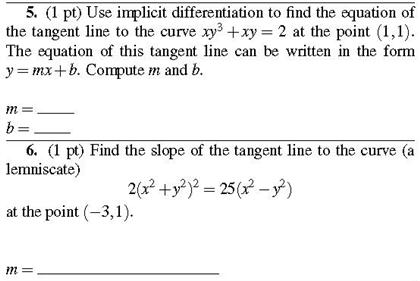
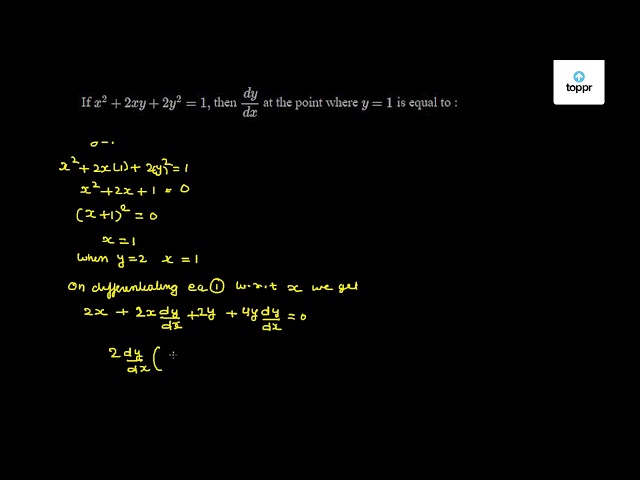
And x>y Calculus Find dy/dx if x^2y^2=2xy A x/(xy) B (yx)/(yx) C 1 D x/y E None of these Calc, Implicit DifferentiationCalculus Find dy/dx 2xyy^2=1 2xy − y2 = 1 2 x y y 2 = 1 Differentiate both sides of the equation d dx (2xy−y2) = d dx (1) d d x ( 2 x y y 2) = d d x ( 1) Differentiate the left side of the equation Tap for more steps 2x d dx y−2y d dx y 2y 2 x d d x y 2 y d d x y 2 y We could solve for dy dx = −(2x 2y 1) 2x − 2y, but if we don't have to, it's usually easier to substitute numbers now At (1,2), we get 2(1) 2(2) 2(1) dy dx − 2(2) dy dx 1 = 0 so 2 4 2 dy dx −4 dy dx 1 = 0 7 − 2 dy dx = 0 and finally dy dx = 7 2 The tangent line contains the point (1,2) and has slope m = 7 2 so its equation is
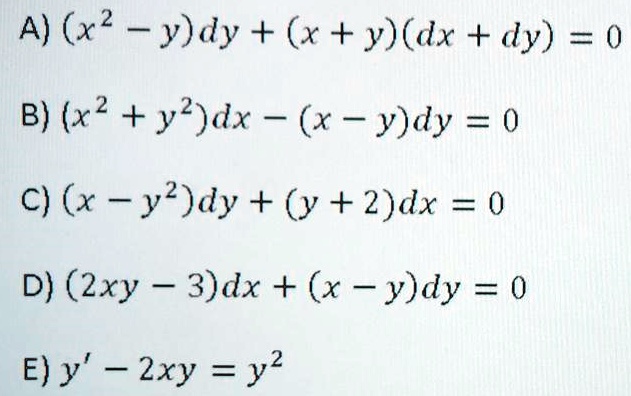
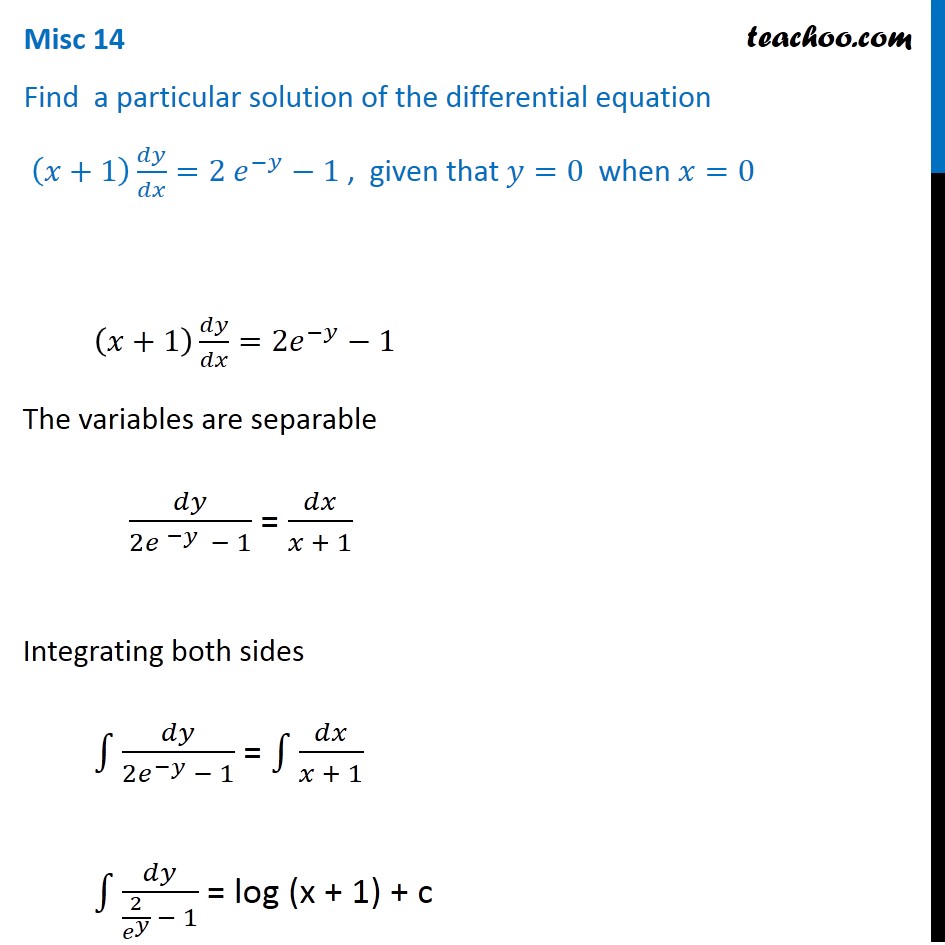
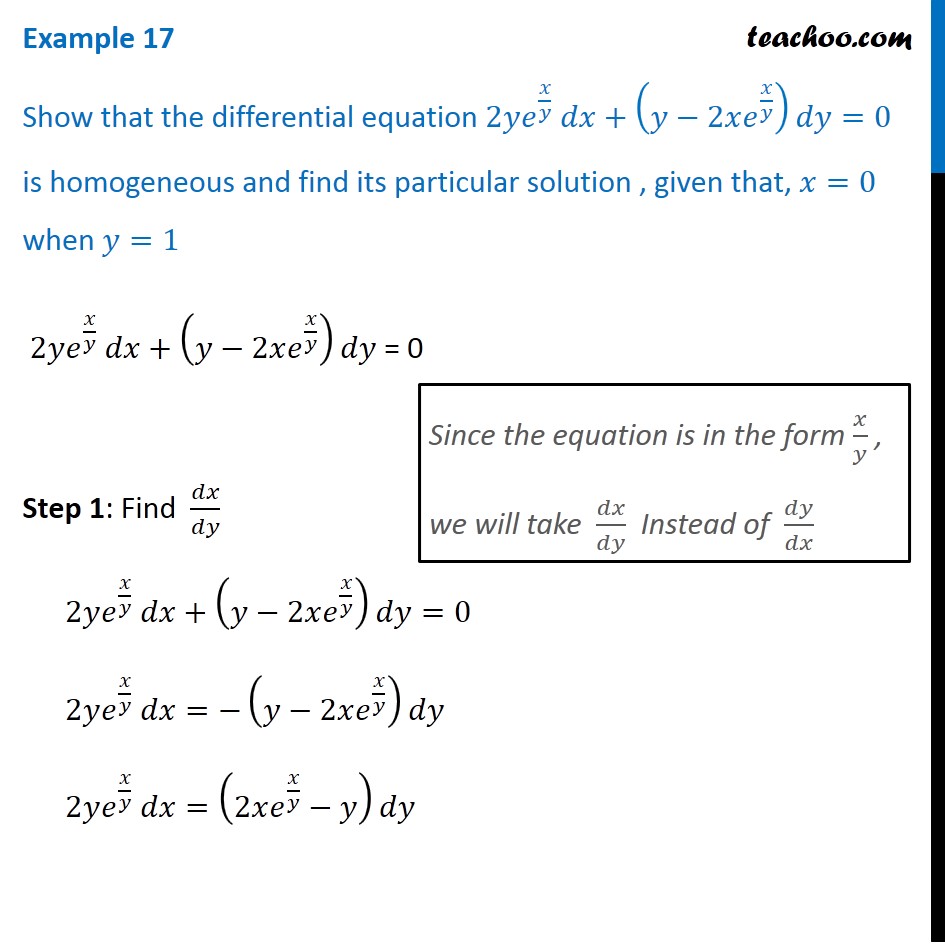
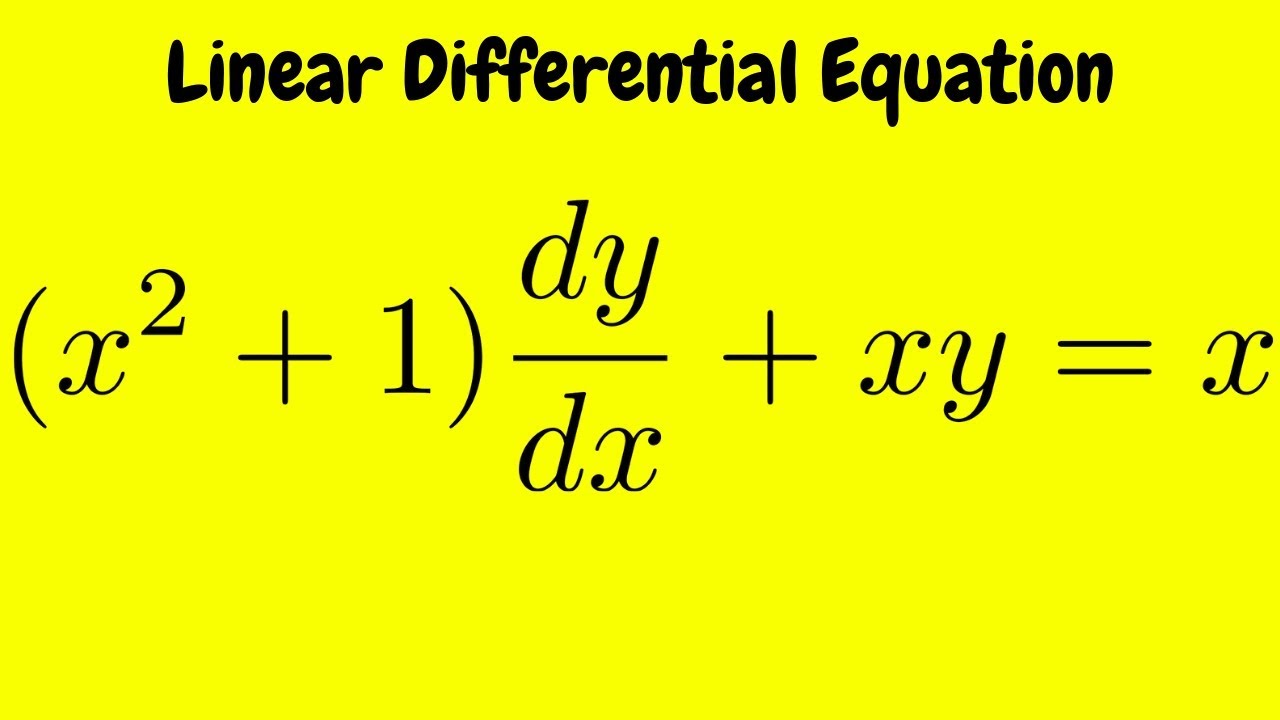
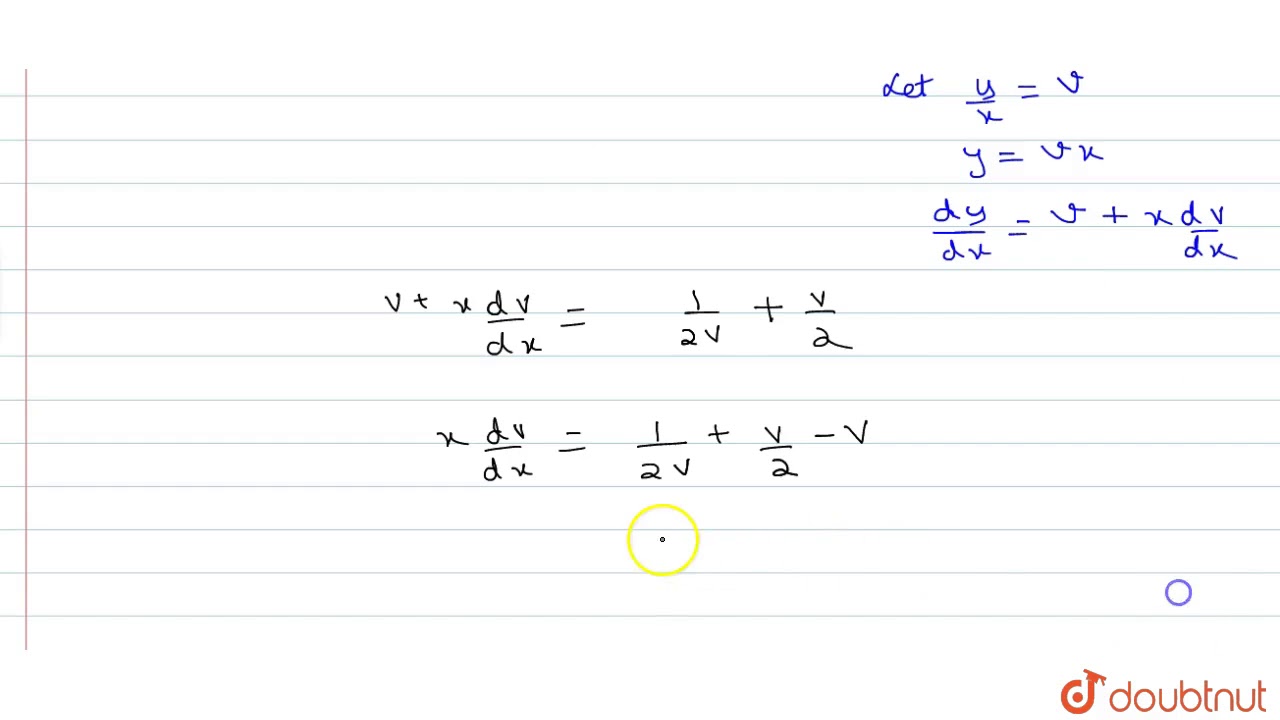
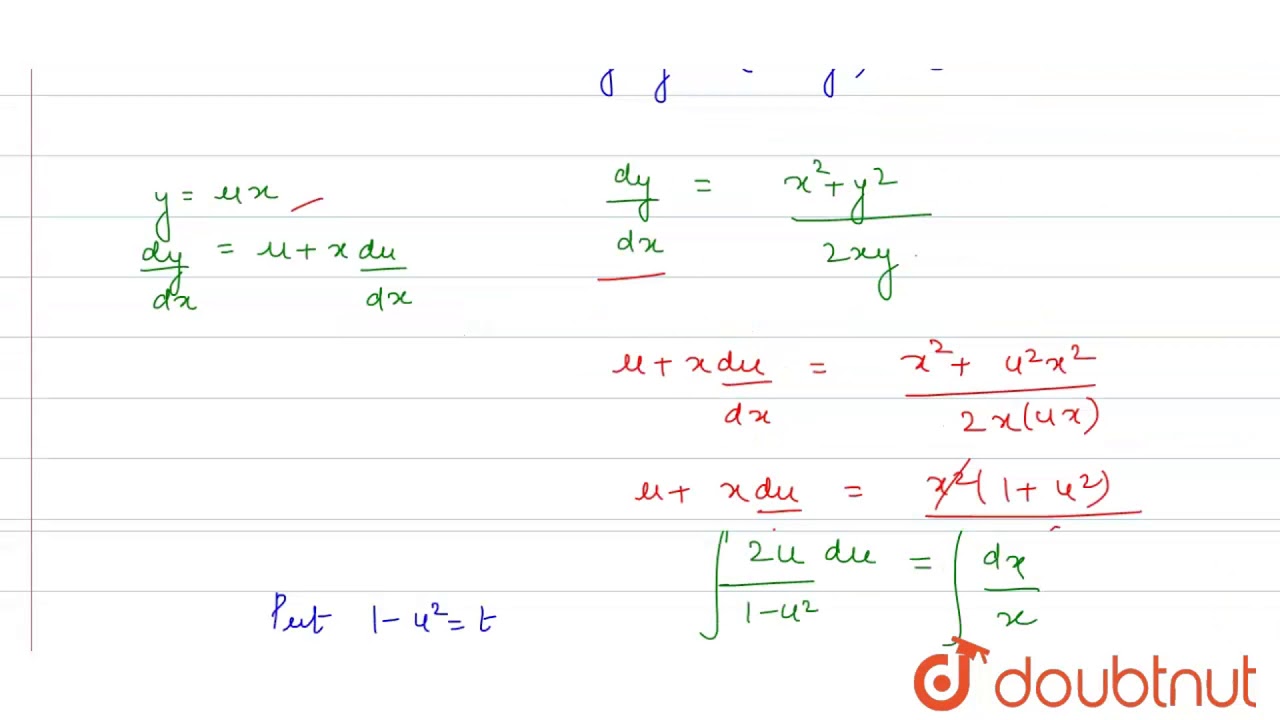
In differential equation show that it is homogeneous and solve it dy/dx = 2xy/(x^2 y^2) asked in Differential Equations by Devakumari ( Correction (after missing a sign) As kobe pointed out, the original DE is $$ (x^2y^2)y'2xy=0, $$ which as equation for a vector field reads $$ (x^2y^2)\,dy2xy\,dx=0\iff Im(\bar z^2\,dz)=0\text{ with } z=xiy $$ From the complex interpretation it is directly visible that this is not integrable, for that it would have to be an expression Expert Answer For this one we look for an integrating factor which will make the equation exact Let M = x − 2 x y − y 2 and N = y 2 Then M x = 1 − 2 y and N y = 2 y which is purely a function of y This tells us that there is an integrating factor μ ( y) which makes the equation exact which satisfies Clearly μ ( y) = e ∫ ( 1 y 2
If x 2xy-y^2=2 at the point (1 1) dy/dx isのギャラリー
各画像をクリックすると、ダウンロードまたは拡大表示できます
 |  |  |
 | ||
 |  |  |
「If x 2xy-y^2=2 at the point (1 1) dy/dx is」の画像ギャラリー、詳細は各画像をクリックしてください。
 |  | |
 |  |  |
 |  | |
「If x 2xy-y^2=2 at the point (1 1) dy/dx is」の画像ギャラリー、詳細は各画像をクリックしてください。
|  | |
 | ||
 | ||
「If x 2xy-y^2=2 at the point (1 1) dy/dx is」の画像ギャラリー、詳細は各画像をクリックしてください。
 |  | |
 |  | |
 |  |  |
「If x 2xy-y^2=2 at the point (1 1) dy/dx is」の画像ギャラリー、詳細は各画像をクリックしてください。
 |  |  |
 | ||
 |  | |
「If x 2xy-y^2=2 at the point (1 1) dy/dx is」の画像ギャラリー、詳細は各画像をクリックしてください。
|  |  |
 |  | |
 |  | |
「If x 2xy-y^2=2 at the point (1 1) dy/dx is」の画像ギャラリー、詳細は各画像をクリックしてください。
 |  |  |
 |  |  |
 | ||
「If x 2xy-y^2=2 at the point (1 1) dy/dx is」の画像ギャラリー、詳細は各画像をクリックしてください。
 |  | |
 |  | |
 | ||
「If x 2xy-y^2=2 at the point (1 1) dy/dx is」の画像ギャラリー、詳細は各画像をクリックしてください。
 |  |  |
 |  | |
「If x 2xy-y^2=2 at the point (1 1) dy/dx is」の画像ギャラリー、詳細は各画像をクリックしてください。
 | ||
 |  | |
 |  | |
「If x 2xy-y^2=2 at the point (1 1) dy/dx is」の画像ギャラリー、詳細は各画像をクリックしてください。
 | ||
 |  | |
 |  | |
「If x 2xy-y^2=2 at the point (1 1) dy/dx is」の画像ギャラリー、詳細は各画像をクリックしてください。
 |  | |
 |  |
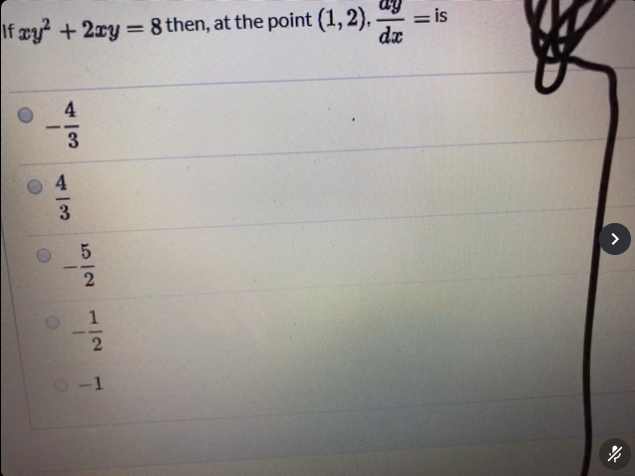
F is continuous at x = 3 f it differentiable at x = 3 f(3) = 7 None II only III only I and III only I, II, and III If y = 2 cos (x/2), then d^2y/dx^2 8 cos (x/2) 2 cos (x/2) sin (x/2) infinitySolution for What is dyldx at the point (1,2) of xy^2 2xy 8 ?


0 件のコメント:
コメントを投稿